Day 14: What is splitting?
Last week's Descending Loop was difficult for me. I got the downstroke but hitting that curve into the loop and transitioning into the light stroke, my hand was trembling. This was better. I can see the slight improvement, but it was hindered by my fraying/splitting pen. I was wondering why my strokes were heavy even when I wasn't applying hard pressure. After I finished practicing, I looked at the pen and seen the issue. See the picture below.
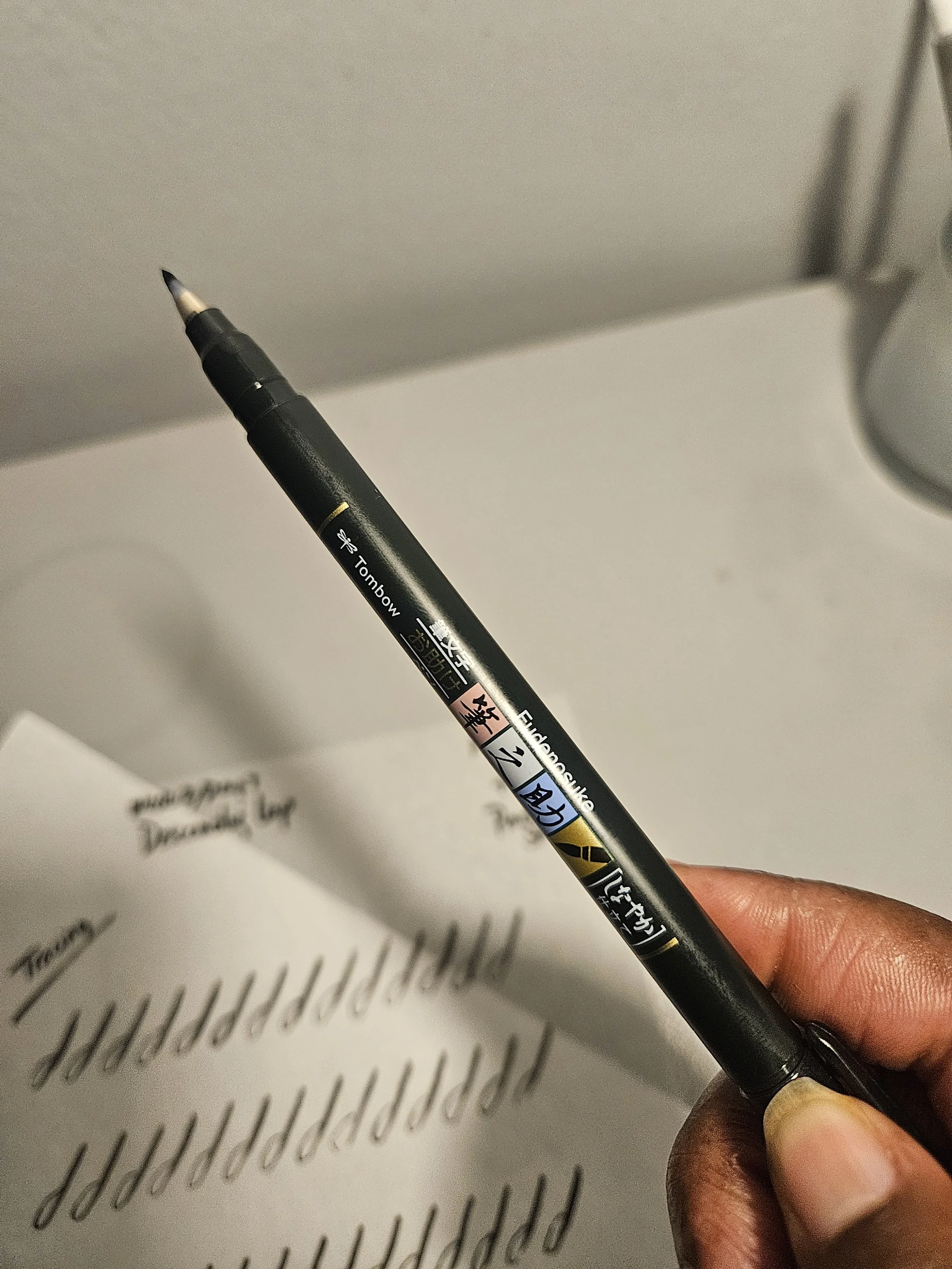
What is splitting/fraying?
Splitting on a soft-tip brush pen is when the brush tip separates into two or more points instead of staying together as a single, smooth tip. It can make your strokes look fuzzy, uneven, or scratchy.
The most common reasons are:
Pressing too hard. This is the #1 cause. Soft brush pens are designed to flex, but too much pressure forces the fibers apart. (This was me)
Using rough paper. Textured or low-quality paper can catch the fibers and cause them to separate.
Moving too quickly with heavy pressure. Fast, forceful downstrokes can stress the tip. (This was me again).
Normal wear. Even the most well-care brush pens eventually wear out after lots of practice. (This is me too).
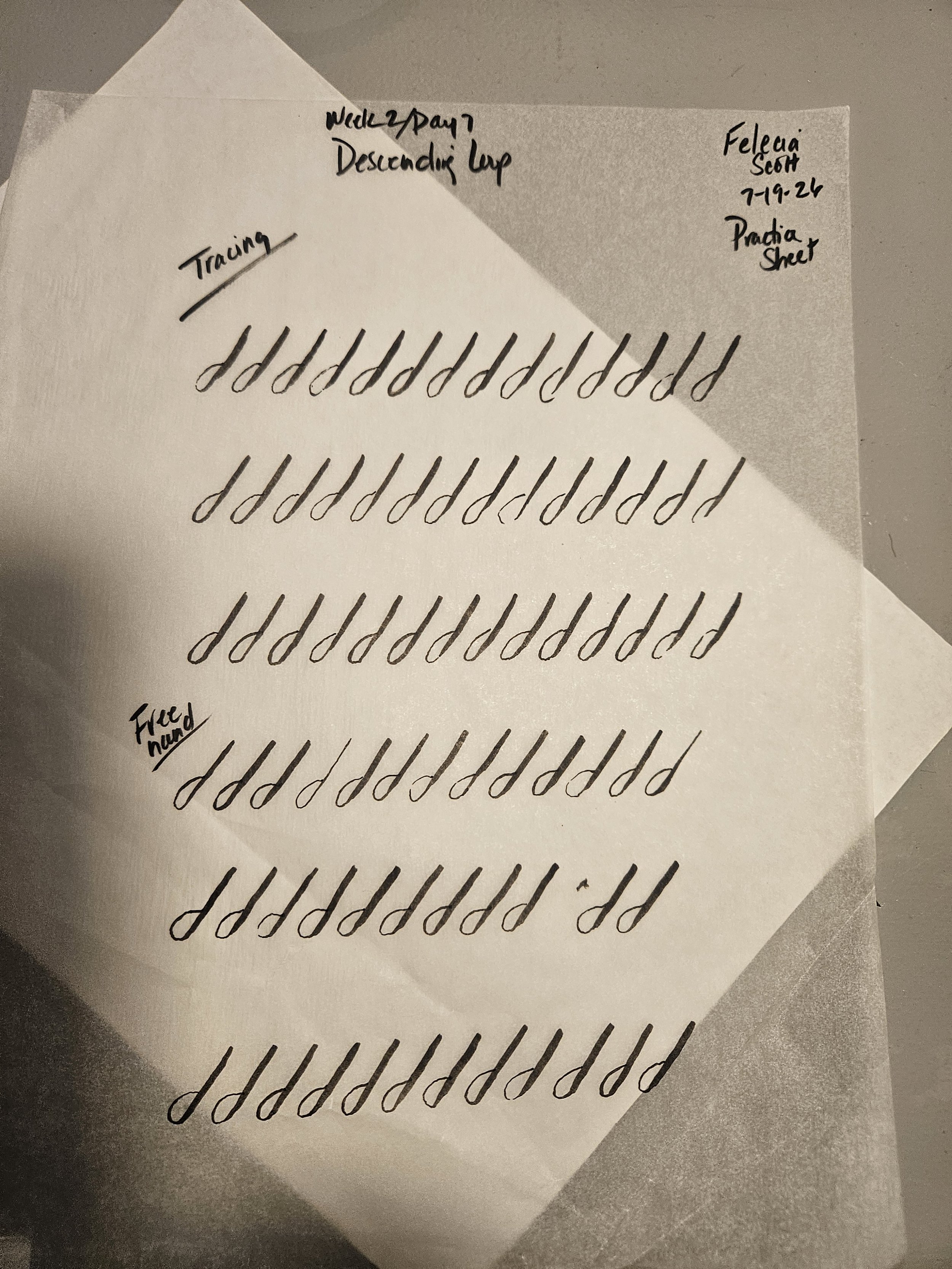
What does it look like?
Instead of one clean downstroke, you might notice:
A tiny "V" shape at the tip.
Two distinct lines instead of one.
Jagged or fuzzy edges on thick strokes.
Difficulty making smooth transitions from thick to thin. (This was me, again)
That black dot on the 5th row is where I dropped my soft tip brush pen right before I started practicing the Descending Loop.
You can see immediately where the fraying began in the first line. I was thinking it wasn’t that bad and by the fourth line, I gave up. I switched to a brand new soft tip brush pen.
Once the fraying starts can it be fixed? Sometimes. Try these first, lighten your pressure. Rotate the pen slightly as you practice, so the same side isn't always taking the pressure. Write on smooth paper (such as HP Premium 32 or marker paper). If the fibers are only slightly separated, gently reshape the tip with your fingers while the pen is capped. My pen was beyond repair.
If the tip stays split no matter what you do, it's usually worn out and it's time to replace the pen. had to throw mine away but luckily, I bought several. One thing about beginners like us find out, you don't need as much pressure as you think. A soft brush pen will produce beautiful thick strokes with surprisingly little force.
A simple way to remember it is:
✨ Light pressure = thin upstrokes
✨ Gentle, controlled pressure = thick downstrokes
❌ Heavy pressure = split tip and shorter pen life