Day 18: When the Curves Start to Flow | Compound Curves
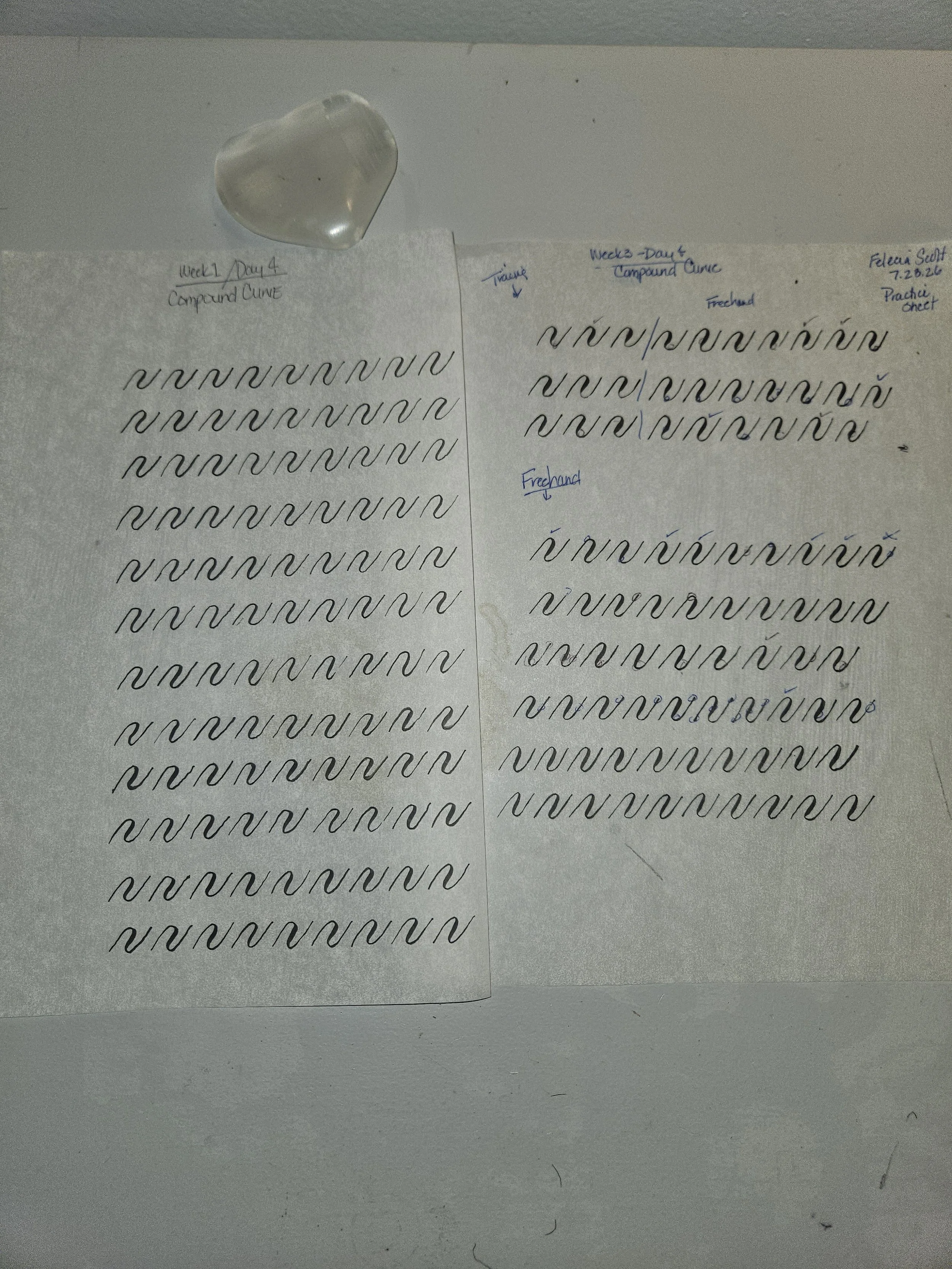
I’ve uploaded Week 1 Vs Week 3 practicing the Compound Curve
I'm very happy with the progress I have made with if not or one of the most challenging basic strokes in calligraphy, the Compound Curve. This practice was 30% tracing and 70% freehand. I will admit by the end practice sheet my hand started getting tired and you can really see it.
As I was writing this, I wanted to share what I've learned so far:
I think calligraphy is interesting because it's one of the few skills where progress is visible. If you keep your practice sheets, you can literally see your hand becoming steadier, your pressure control improving, and your letters becoming more consistent over time.
A few thoughts that stand out to me:
Calligraphy teaches patience. Unlike typing, you can't rush a graceful stroke. The pen tells you when you're moving too fast.
The basic strokes matter more than the alphabet. Many beginners want to jump straight to writing beautiful words, but mastering the fundamental strokes makes every letter easier later.
It's less about talent than repetition. Most people who create beautiful writing weren't born with it—they practiced thousands of deliberate strokes.
Mistakes are part of the process. Wobbly upstrokes, uneven ovals, and shaky transitions aren't signs of failure. They're evidence that you're learning a new motor skill.
It's surprisingly mindful. Focusing on pen angle, pressure, and movement can make a practice session feel calming because your attention stays on one simple task.
Everyone's writing develops its own personality. Even when two people learn the same script from the same instructor, subtle differences in rhythm and movement make their work unique.
Improvement often comes in jumps. Sometimes you feel stuck for several days, then one practice session suddenly clicks. Those plateaus are a normal part of learning.
Good calligraphy isn't perfect calligraphy. A few tiny imperfections often make hand-lettered work feel more human and expressive.
One thing I especially like about learning calligraphy is that it rewards consistency more than intensity. Fifteen to thirty minutes of focused practice every day. If your practice sheet looks like nothing you hoped for today, don't let that stop you from coming back tomorrow. Every confident calligrapher started with shaky strokes and uncertain hands. Keep showing up. One practice session at a time, you're building a skill that can't be rushed.